
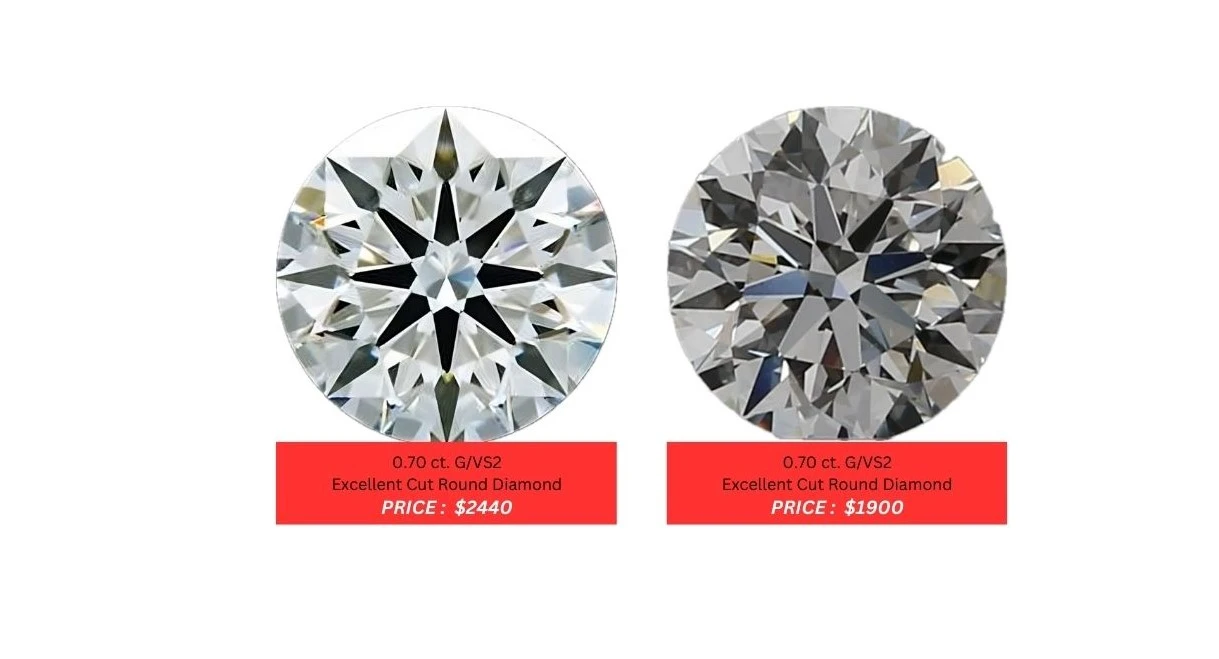
Consider the diamonds below. Both are 0.70 Carat, G Color, VS2, Excellent Cut Round Diamonds. Based on grading certificate alone, these diamonds appear nearly identical. However, with our diamond experts, you can see just how different these two diamonds truly are!
First, let’s look at the diamonds’ certificates:
Based on the certificate alone, which one would you choose?
Now, take a look at the actual diamonds:
Now, let’s look at some differences:
Based on these actual diamond images, which diamond would you choose?
Despite similar certificates, Diamond A is priced at $2,440 while Diamond B is priced at $1,900—a difference of approximately $540. The higher-priced diamond may be eye-clean, while the lower-priced one may have visible inclusions.
This highlights the importance of seeing actual diamonds rather than relying solely on grading certificates. At Videh, we believe in providing complete transparency and the best value for your investment.
If you have any questions about a particular diamond, feel free to contact us. We have highly trained gemologists available 24/7 to assist you.
Carat is a term that refers to the weight of a diamond. Before the twentieth century, diamonds were measured using carob seeds, known for their small and uniform size, which served as perfect counterweights to the diamond. The term “carob” is the origin of the word “carat” that we use today.
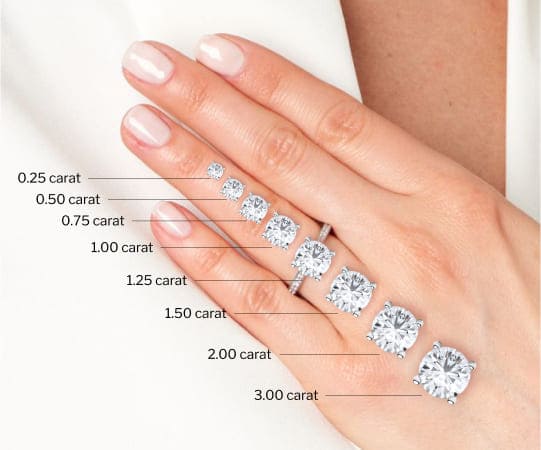
The size of a diamond is directly proportional to its carat weight. When rough diamonds are cut and polished into finished diamonds, up to two-thirds of the total carat weight may be lost. Larger rough gems of high quality are rarer than smaller ones, making a single two-carat diamond more expensive than two one-carat diamonds of the same quality.
In the United States, most diamonds used in jewelry and sold as loose diamonds weigh one carat or less. The average engagement ring diamond sold in the U.S. weighs less than half a carat.
It’s important to note that a diamond’s weight increases much faster than its actual “face-up” diameter. For instance, while an ideal cut one-carat diamond measures approximately 6.5mm in width, a diamond of twice the weight measures only 8.2mm wide—less than a 30% increase. This illustrates that carat weight alone does not fully determine a diamond’s appearance.
Selecting the right carat weight depends on personal preference and budget. When considering a diamond engagement ring, the most visible aspect is the size of the surface area on the top of the diamond. It is difficult to determine a diamond’s carat weight just by looking at it. Although carat weight significantly influences cost, focusing on diamond cut and diameter can provide a better overall value and appearance.
At Amba, we emphasize the importance of balancing carat weight with other critical factors like cut and diameter to ensure you choose a diamond that meets your desires and fits your budget.
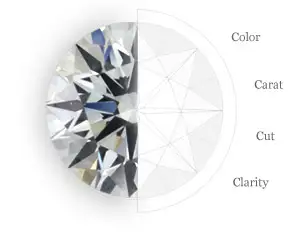
Choosing the perfect diamond for a jewelry is an important decision. While some may prefer gemstones or rough diamonds, classic diamonds remain the most popular choice. To make an informed decision, it’s essential to understand the four key characteristics, known as the 4 C’s:
Although not one of the 4 C’s, the shape of a diamond is crucial in selecting an engagement ring. Videh offers a variety of diamond shapes, including:
Understanding how to choose the perfect diamond is crucial when selecting your Jewelry. Ensure you have a comprehensive knowledge of diamond characteristics and structures before making your final choice.
Note: The term “perfect” refers to the ideal diamond for you, based on your preferences and budget.
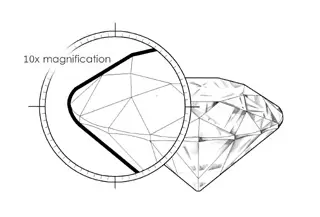
When selecting a diamond, it is crucial to choose one that is free from inclusions that could impact its overall beauty and durability. For absolute assurance that your diamond will be completely free of “eye-visible” inclusions, opt for diamonds graded “VS2” or higher. Shopping for SI quality diamonds can be very rewarding, but it’s best to have those diamonds reviewed by Amba’s expert staff before finalizing your order. This will ensure you receive a diamond without any inclusions visible to the naked eye.
It’s also advisable to balance the clarity grade of your diamond with its color. If you are considering diamonds in the D-F color range, focus on clarity grades of VS2 or higher. Diamonds in the G-I color range combined with SI clarity offer excellent value.
The Gemological Institute of America (GIA) has established a clarity grading scale that is widely recognized and respected in the diamond industry. Here are the GIA clarity grades:
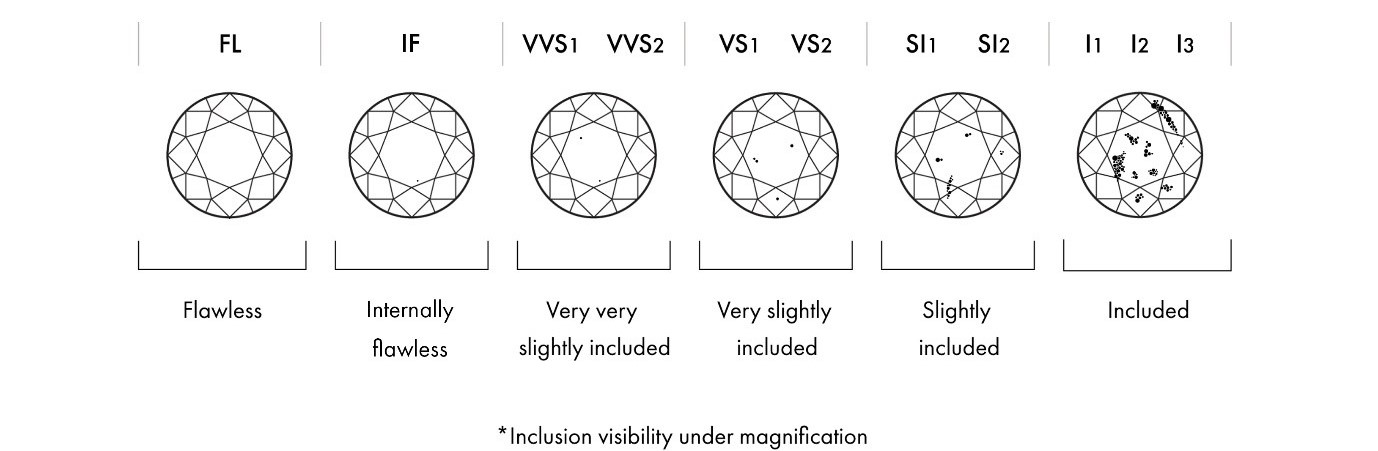
FL (Flawless): No inclusions or blemishes visible under 10x magnification. Extremely rare and valuable.
IF (Internally Flawless): No inclusions and only minor surface blemishes visible under 10x magnification
VVS1 and VVS2 (Very, Very Slightly Included): Minute inclusions that are difficult for a skilled grader to see under 10x magnification.
VS1 and VS2 (Very Slightly Included): Minor inclusions that are visible under 10x magnification but are considered minor.
SI1 and SI2 (Slightly Included): Noticeable inclusions under 10x magnification. SI1 inclusions are typically not visible to the naked eye, while SI2 inclusions may be.
I1, I2, and I3 (Included): Inclusions that are obvious under 10x magnification and may affect transparency and brilliance. Inclusions are often visible to the naked eye.
D-F Color Range: opt for clarity grades of VS2 or higher to ensure your diamond appears flawless to the naked eye.
G-I Color Range: SI clarity diamonds offer excellent value, as their inclusions are typically not visible to the naked eye, especially when set in jewelry.
By understanding these clarity grades and balancing them with your desired color range, you can make an informed decision to select a beautiful and durable diamond from Amba.
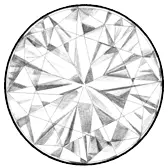
When selecting a diamond, the preference is typically for a stone with the least amount of color. Diamond color is graded on a scale from D-Z and is divided into five broad categories: colorless, near colorless, faint, very light, and light. The predominant color observed in diamonds is yellow, caused by the trace element nitrogen. Diamonds can also come in other colors across the spectrum.
Generally, it requires comparing diamonds that are at least two color grades apart to notice a difference. From the face-up position, it is almost impossible to see any color. However, when viewing the diamond from the side profile, some color may be detected. Diamonds are primarily admired for their beauty from the face-up position.
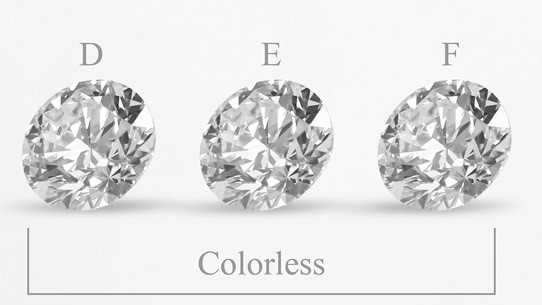
Diamonds within the colorless range are the rarest and most valuable. D/E color stones display virtually no color, while F colored diamonds will show a nearly undetectable amount of color when viewed face down by a gemologist.
D Color
E Color
F Color
Diamonds in the near colorless range appear colorless in the face-up position but show a slight amount of color when viewed face down against a perfectly white background. This trace amount of color is undetectable to an untrained eye once the diamond is mounted. Near colorless diamonds offer excellent value for their price.
G Color
H Color
I Color
J Color
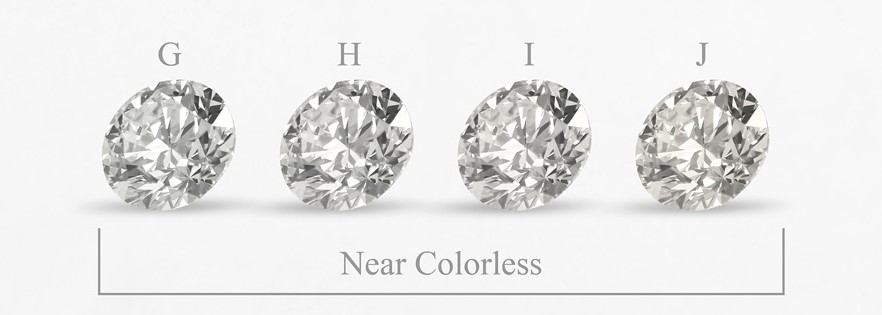
Diamonds in the faint color category may show a slight hint of color when viewed in the face-up position. These diamonds are a great option for those who are not sensitive to color. Some even appreciate the unique color scheme these diamonds exhibit.
K Color
L Color
M Color
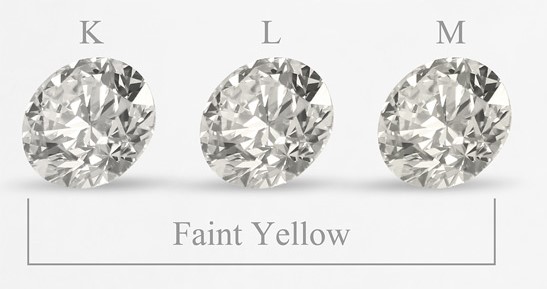
Diamonds in this range show noticeable color, even to the untrained eye. They can still be beautiful and offer a good value for those who appreciate their warm hue.
N Color
O Color
P Color
Q Color
R Color
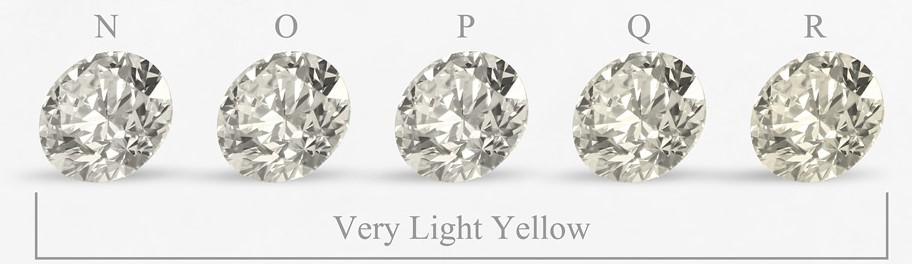
Diamonds in this range have a more apparent color, which can range from light yellow to brown. They are less expensive and may appeal to those who prefer a more unique look.
S Color
T Color
U Color
V Color
W Color
X Color
Y Color
Z Color

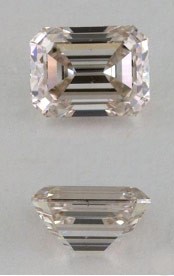
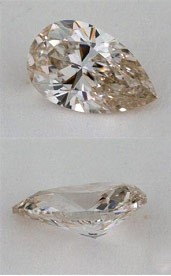
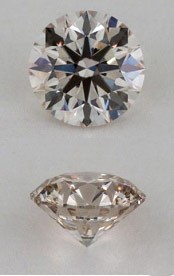
The predominant color found in diamonds is yellow, but it is not uncommon for diamonds to have a brown hue. This is often due to internal graining from structural irregularities, sometimes combined with impurities like nitrogen.
When determining the quality and value of a fancy color diamond, three main criteria are considered:
1. Primary Color: The diamond’s main color (e.g., pink).
2. Secondary Color: Any addiƟonal hues present in the diamond (e.g., purplish).
3. Color Intensity: The strength of the diamond’s color (e.g., fancy, fancy intense, fancy vivid).
The combination of primary and secondary colors defines the tone of the diamond’s color, while the intensity level indicates how strong or vivid the color appears. Generally, the more intense the color, the more valuable the diamond becomes.
Fancy color diamonds are classified into several intensity levels:
Faint
Very Light
Light
Fancy Light
Fancy
Fancy Intense
Fancy Vivid/Fancy Deep/Fancy Dark
Understanding these classifications can help you choose a fancy color diamond that meets your preferences and investment goals.

At Videh, we share your concern about the origins of your diamonds. Every diamond we sell is certified conflict-free in compliance with the Kimberley Process and United Nations resolutions. Our standards go beyond government requirements, with binding contracts from suppliers ensuring all diamonds are conflict-free. We exclusively purchase polished diamonds from professional diamond trade members.
The Kimberley Process Certification Scheme (KPCS) ensures rough diamonds are conflictfree. The World Diamond Council’s System of Warranties extends this guarantee to polished diamonds. At Videh, we are committed to maintaining these standards, ensuring all our diamonds are responsibly sourced.
The cut of a diamond not only refers to the diamond’s shape but also to how effectively the diamond returns light back to the viewer’s eye. A well-cut diamond will appear very brilliant and fiery, while a poorly cut diamond can appear dark and lifeless, regardless of its color or clarity.
Not only do well-cut diamonds appear more brilliant, but they also tend to appear larger than other diamonds of the same carat weight. An “ideal” diamond has both increased brilliance and diameter relative to more deeply-cut diamonds.
The Gemological Institute of America (GIA) classifies diamond cut grades into five distinct categories: Excellent, Very Good, Good, Fair, and Poor. Understanding these grades can help you choose a diamond that best meets your desires for brilliance and fire.
Excellent Cut: Reflects nearly all the light that enters the diamond, producing exceptional sparkle and fire.
Very Good Cut: Reflects most of the light that enters, offering high brilliance and sparkle.
Good Cut: Reflects a significant portion of the light, providing a good level of brilliance.
Fair Cut: Reflects some light, but not as much as higher grades. It offers reasonable sparkle.
Poor Cut: Reflects very little light, resulting in minimal brilliance and a dull appearance
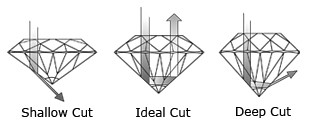
An Ideal Cut Diamond is a round, brilliant, or princess cut diamond that is cut to ideal proportions and angles, and has excellent polish and symmetry ratings. An Ideal Cut Diamond is perfectly proportioned to refract light, producing that fire and brilliance up through the table and crown.
Hearts and Arrows diamonds are renowned for their perfect optical symmetry. Seen from above, these diamonds display an arrow pattern, and when viewed from the pavilion side, they reveal 8 hearts with tiny ‘v’ shapes. This precise cut ensures maximum light return and exceptional brilliance.
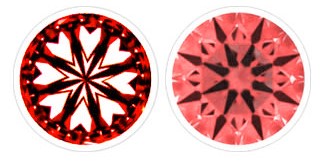
A well-cut diamond exhibits three important properties
Brilliance: The reflection of white light from the diamond’s surface and interior. It is the primary factor that makes a diamond sparkle.
Dispersion (Fire): The scattering of light into its spectral colors as it passes through the diamond. This separation of white light into its component colors is known as fire.
Scintillation: Flashes of light and dark areas observed as the diamond is moved. This effect adds to the diamond’s overall sparkle.
A diamond’s cut grade is crucial because it affects how light interacts with the stone. Well-cut diamonds not only appear larger for their carat weight but also display superior brilliance and fire.
At AMBA, we adhere to the GIA’s stringent cut grade standards to ensure our diamonds exhibit optimal beauty and quality. Understanding these cut grades helps you make an informed decision when selecting a diamond. Explore our collection to experience the brilliance of our well-cut diamond jewelry.
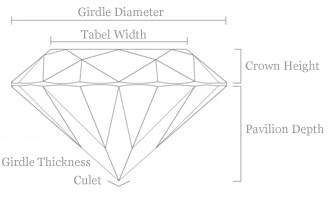
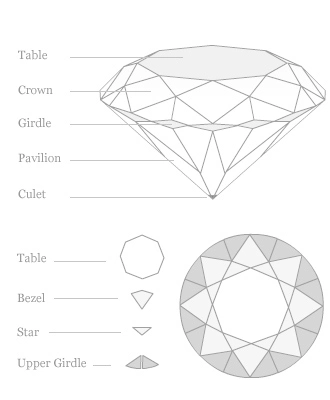
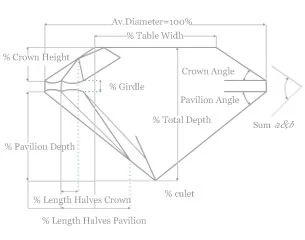
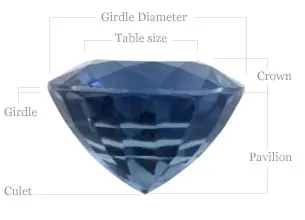
While every diamond is unique, all diamonds share certain structural features. A diamond’s anatomy, or its basic structure, determines its proportions, brilliance, dispersion, and scintillation. Each part of the diamond has a specific name, and understanding how each part contributes to the diamond as a whole will help you find your perfect diamond.
A diamond is comprised of eight main components. Here is a brief description of each part of a diamond and its location:
Diameter: The width of a polished stone, measured from edge to edge.
Table: The largest polished facet located on the top of the diamond.
Crown: The top part of a diamond extending from the table to the girdle. The crown is made up of bezel facets (crown mains), star facets, upper girdle facets (upper halves), and a table facet.
Girdle: The very edge (widest edge) of the diamond where the crown and pavilion meet.
Pavilion: The bottom part of a diamond extending from the girdle down to the culet.
Depth: The total height of a diamond measured from the table to the culet.
Culet: The small or pointed facet at the very bottom of the diamond.
Before purchasing a diamond, make sure that you have a basic understanding of a diamond’s anatomy. This will allow you to truly appreciate diamonds and all their intricacies, communicate with experts about a particular diamond, and, most importantly, it will assist you in making a well-thought out decision about which diamond is best for you.
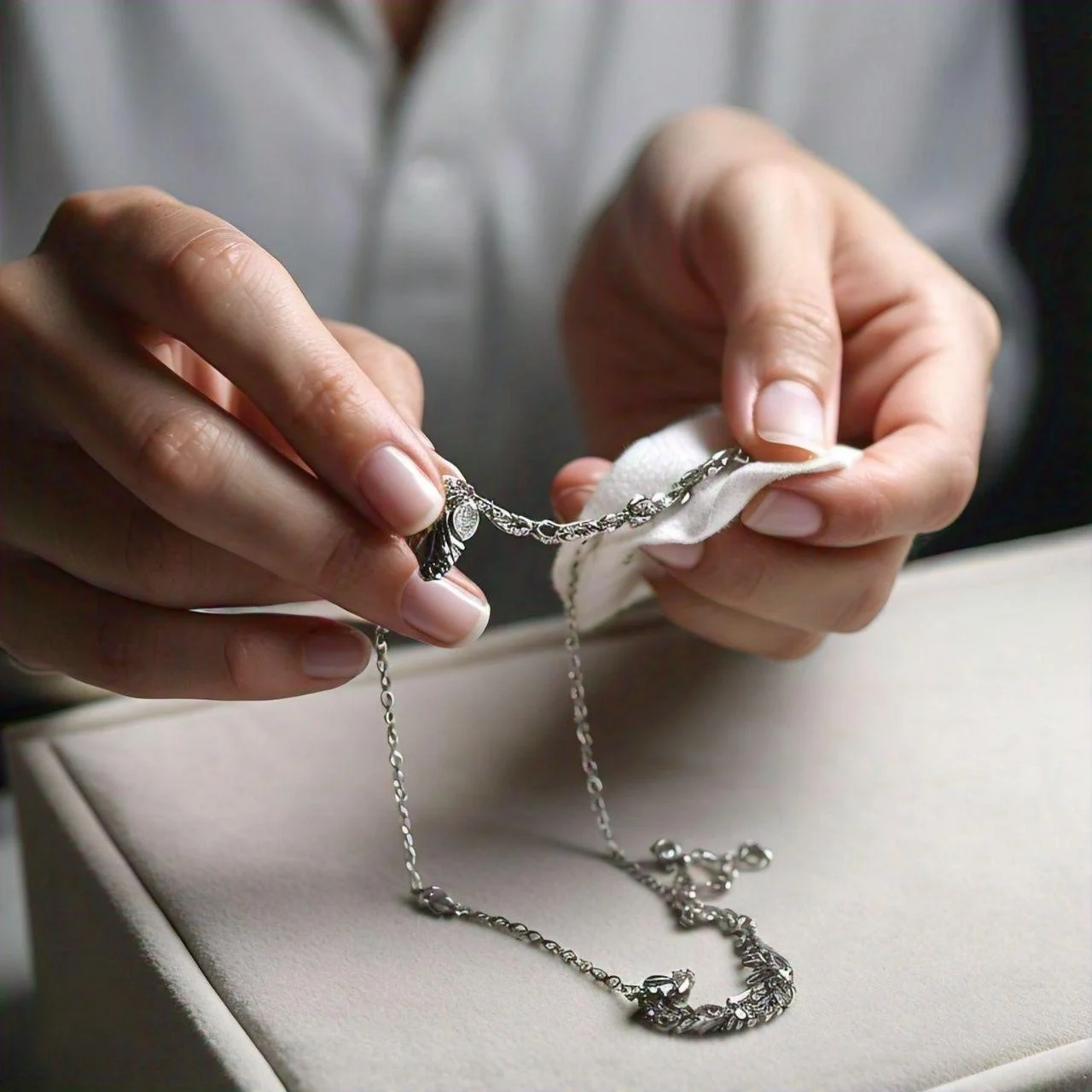
Proper care and maintenance of your diamond jewelry ensure it retains its brilliance and beauty. Here’s how to keep your diamonds sparkling:
Proper care extends beyond cleaning. Here are some tips to ensure the longevity of your diamond jewelry:
By following these guidelines, you can keep your diamond jewelry looking as stunning as the day you bought it. If you have any questions about diamond care or need assistance with a particular piece, feel free to contact us. Our highly trained gemologists are available to help you 24/7.
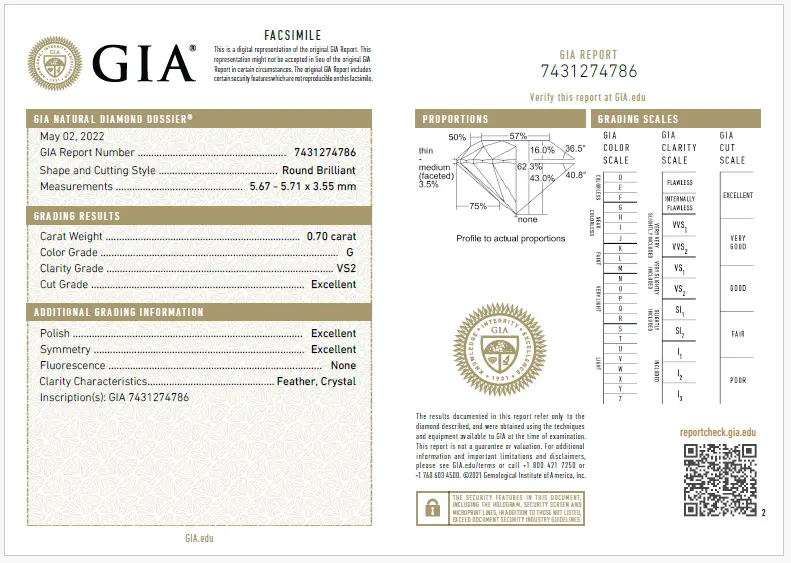
A diamond certificate, also known as a grading report, verifies a diamond’s specifications, including its color grade, carat weight, clarity grade, and cut grade. It is crucial to never buy a diamond without a certificate, as it ensures the quality and authenticity of the stone. The most reputable grading laboratories include the Gemological Institute of America (GIA), the American Gem Society (AGS), Solitaire Gemmological Laboratories (SGL) and the International Gemological Institute (IGI).
A diamond’s cost is determined by its objective characteristics, commonly known as the 4Cs: Color, Clarity, Cut, and Carat. The interplay between these four factors determines a diamond’s overall value. While it is often assumed that carat weight is the most important factor, color, cut, and clarity have a more significant impact on a diamond’s appearance.
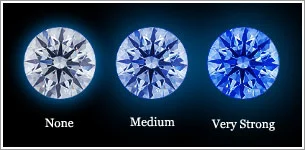
Fluorescence is a naturally occurring phenomenon in certain minerals and gems, including some quality diamonds. When exposed to ultraviolet (UV) light, these diamonds emit a visible light known as fluorescence. While this fluorescence is typically not visible under most lighting conditions, a diamond will exhibit a soft colored glow when held under a UV lamp.
Not all diamonds exhibit fluorescence. If a diamond does not fluoresce, its grading report will note the fluorescence level as either inert or none.
The degree of fluorescence in diamonds can vary, and it is typically categorized as follows:
Faint: The diamond exhibits a slight glow that is difficult to see under UV light.
Medium: The diamond shows a noƟceable glow under UV light.
Strong: The diamond emits a clear glow under UV light.
Very Strong: The diamond displays a deep and prominent glow under UV light.
The color of the fluorescence can also vary, with blue being the most common. However, some diamonds may fluoresce in yellow, green, or white.
In regular lighting conditions, fluorescence usually has no significant effect on a diamond’s appearance. However, in certain cases, strong blue fluorescence can make a yellow-tinted diamond appear whiter. In rare instances, strong fluorescence can cause a diamond to appear milky or oily.
Understanding the role of fluorescence can help you make an informed decision when selecting a diamond, ensuring you choose a stone that meets your preferences and maintains its beauty under various lighting conditions.
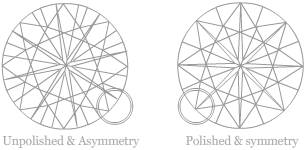
Diamond polish is a crucial factor in determining a diamond’s brilliance and overall appearance. The quality of a diamond’s polish affects how well light can pass through the stone, influencing its sparkle and visual appeal. When selecting a diamond, it is essential to choose one with a polish grade of Good, Very Good, or Excellent, as certified by a reputable laboratory.
Diamonds with poor polish may have microscopic polish lines that blur the surface, reducing the amount of light that enters and exits the diamond, thus diminishing its brilliance. Some diamonds suffer from poor polish because diamond cutters may reduce costs by not spending enough time on proper polishing.
Polish is graded similarly to symmetry, with specific grades assigned by gemological laboratories such as GIA, AGS, and IGI. The grades include:
EX or E (Excellent): Flawless at 10X magnification
VG or VGD (Very Good): Extremely difficult to locate flaws under 10X magnification
GD, GO, G (Good): Very difficult to see flaws under 10X magnification
F, FR, FA (Fair): Noticeable under 10X magnification
PR, PO, P (Poor): Easy to see flaws under 10X magnification / Visible to the unaided eye
VP, VE (Very Poor): Relatively easy to see flaws with the unaided eye
EX or EP (Extremely Poor): Obvious flaws visible to the unaided eye
While there may be minimal differences between these ratings to the unaided eye, a diamond with a Good polish grade can still be a remarkable stone. The distinctions between these ratings become more apparent under magnification. However, polish rated as Fair (FR) or Poor (PR) indicates that the polish flaws are visible to the naked eye, affecting the diamond’s overall beauty.
In addition to diamond polish, it’s vital to ensure that all pieces of jewelry do not have a porosity problem or rough spots in the metal. Porosity refers to tiny surface holes that worsen as they penetrate deeper into the metal. This issue is often a result of mass production with poor quality control and can make a piece of jewelry weak and non-repairable. Jewelry with porosity will eventually deteriorate and break down, compromising its structural integrity and beauty.
Whether you’re selecting a ring, necklace, bracelet, or any other piece of diamond jewelry, understanding the importance of diamond polish and ensuring high-quality craftsmanship will help you choose pieces that maintain their brilliance and durability for a lifetime.
Well-proportioned diamonds exhibit three essential properties: brilliance, dispersion, and scintillation. Understanding these properties is crucial to appreciating a diamond’s overall beauty and value.
Brilliance: When light strikes a diamond’s surface, it can either reflect off the table (the largest, flat facet on the top of the diamond) or enter the diamond. The light that is reflected off the table is known as brilliance. This is the flash of white light one sees when looking at a diamond, contributing to its overall sparkle and allure.
Dispersion (Fire): As light travels through a diamond, some of the light rays are bent and separated into flashes of color. This separation of white light into its spectral colors is known as dispersion. The colorful flashes that result from dispersion are referred to as fire. Fire adds a dazzling array of colors to a diamond’s sparkle, enhancing its visual appeal.
Scintillation: Scintillation refers to the flashes of color and light that are visible when an observer moves the diamond back and forth. This property is the result of both brilliance and dispersion working together. Scintillation creates a dynamic and captivating visual effect, making the diamond appear lively and full of movement.
To truly appreciate the interplay of these properties, it’s essential to understand how the proportions of a diamond affect its brilliance, dispersion, and scintillation. Use this interactive tool to see how depth and table percentages can impact the brilliance in a round diamond. Please note that this example is for a round diamond only — fancy shapes have their own set of unique properties that influence their brilliance, fire, and scintillation differently.
By understanding these concepts, you can make an informed decision and select a diamond that embodies the perfect balance of brilliance, fire, and scintillation, ensuring it captivates and dazzles from every angle.
Symmetry refers to the precision and alignment of a diamond’s facets. While minor asymmetries may have a negligible impact on appearance to the naked eye, symmetry is crucial for enhancing a diamond’s brilliance and overall appeal. In diamonds with lower clarity grades, symmetry is less critical, but in diamonds with high clarity grades, maintaining excellent symmetry is paramount.

The girdle of a diamond should be a flat plane, parallel to the table. A “wavy” girdle, where the girdle undulates around the diamond, can disrupt symmetry and affect the diamond’s light performance.

In a round diamond, the top points of the pavilion mains and the bottom points of the bezel facets should align precisely at the girdle. Misalignment of the crown and pavilion facets can detract from the diamond’s visual appeal.

Extra facets are typically found on the pavilion near the girdle but can occur anywhere on a diamond. These additional facets can alter the diamond’s symmetry and affect its light performance.

To check if the culet is centered, observe the diamond in the face-up position. The lower girdle facets should form a perfect square. If the lines formed by these facets appear bent, the culet is off-center, affecting the diamond’s symmetry.

The table, the largest facet on a diamond, should be centered at the top and parallel to the girdle. An off-center table causes uneven crown angles and an unbalanced appearance.

If the table is not parallel to the girdle, it creates uneven crown angles, resulting in an unbalanced look from the top view.

A correctly shaped table displays a regular octagon with eight equal sides. Facets that are not properly shaped or sized can disrupt the diamond’s symmetry and aesthetic appeal.

Round brilliants are designed to exhibit 58 precisely shaped facets. Facets that do not meet at a direct point compromise the diamond’s overall symmetry.

Naturals are remnants of the original rough diamond. They usually occur on the girdle but can extend towards the pavilion or crown. Naturals can affect the diamond’s symmetry if not properly managed.
Understanding these symmetry features helps in appreciating the intricacies of diamond craftsmanship and selecting a diamond that exhibits optimal brilliance and beauty.
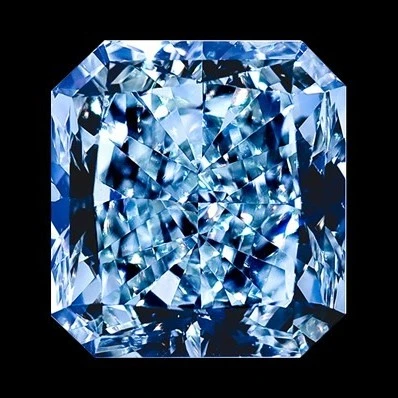
Fancy blue diamonds are among the rarest and most valuable colored diamonds. Their colors range from light blue to dark blue, with the following gradations:
Faint Blue
Very Light Blue
Light Blue
Fancy Light Blue
Fancy Blue
Fancy Intense Blue
Fancy Dark Blue
Fancy Deep Blue
Fancy Vivid Blue
Some blue diamonds may also exhibit traces of green or grey. The distinctive blue tint of these diamonds is primarily due to the presence of boron, with hydrogen and nitrogen also contributing. One of the most famous fancy blue diamonds in the world is the Hope Diamond, which weighs over 45 carats.
Blue diamonds are formed when boron becomes trapped in the diamond’s matrix during its formation. Typically, blue diamonds contain negligible nitrogen impurities.
Blue diamonds are an excellent choice for adding to your diamond collection and look especially striking when set in platinum or white gold settings.
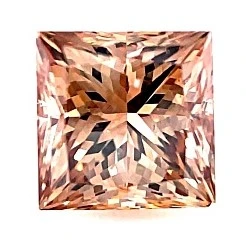
Fancy brown diamonds offer a distinctive and elegant alternative to the classic white diamond. The rich brown color is a result of changes in the diamond’s molecular structure. Light brown diamonds are often referred to as champagne diamonds, while those with hues of orange are known as cognac diamonds.
Brown diamonds are an excellent choice to diversify your diamond collection and look particularly striking when set in yellow gold settings.
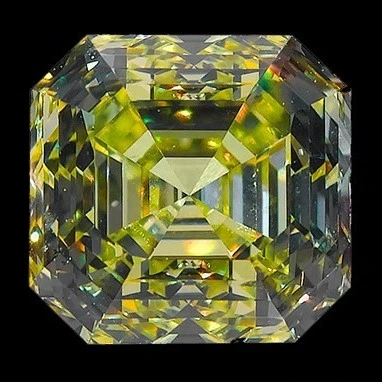
Fancy green diamonds are the second rarest fancy color diamonds, surpassed only by red diamonds. Due to the combination of blue and yellow, green diamonds often range from blue-green to yellow-green, with some even displaying hints of grey or brown. Pure green diamonds, which exhibit no traces of other colors, are incredibly rare and valuable.
The grading scale for green diamonds includes:
Faint Green
Very Light Green
Light Green
Fancy Light Green
Fancy Green
Fancy Intense Green
Fancy Dark Green
Fancy Deep Green
Fancy Vivid Green
Green diamonds form over millions of years, infused with beta and gamma rays that contribute to their green hue. In some cases, the green color is only on the surface, meaning it can fade over time, making pure green diamonds exceptionally rare.
Green diamonds are an excellent choice for adding to your diamond collection and look especially striking when set in platinum or white and yellow gold settings.
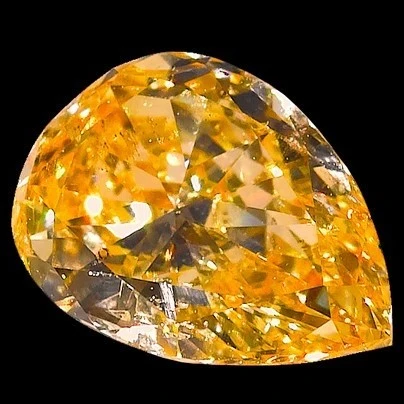
Fancy orange diamonds are a unique and captivating choice for any diamond collection. These diamonds often contain overtones and hues of brown, yellow, or pink. They are mostly sourced from the Argyle Mine in Australia or South Africa. Orange diamonds are typically graded as follows:
Fancy Orange
Fancy Intense Orange
Fancy Vivid Orange
Fancy Deep Orange
Fancy Dark Orange
For a diamond to be considered truly orange, it must contain no traces of brown, which is exceptionally rare. Due to their rarity, less is known about true orange diamonds compared to other fancy color diamonds like pink or yellow.
Orange diamonds are an excellent option to enhance your diamond collection and look especially striking when set in platinum or white gold settings.
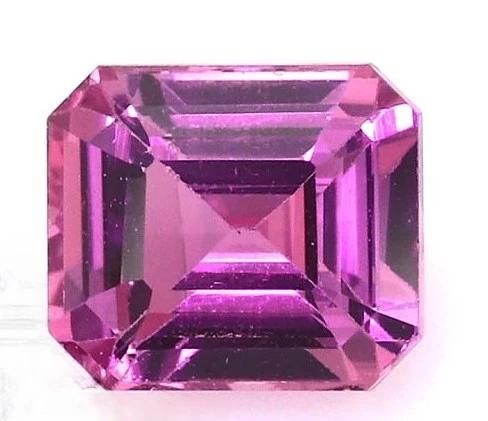
Pink diamonds are among the most alluring and valuable fancy diamonds available. Their extreme rarity makes them highly sought after, with a range of hues that include:
Very Light Pink
Light Pink
Fancy Light Pink
Fancy Pink
Fancy Intense Pink
Fancy Vivid Pink
Fancy Deep Pink
Unlike other fancy color diamonds, the exact cause of the pink hue in pink diamonds remains a mystery. Some scientists theorize that an atomic-level lattice defect selectively absorbs light, resulting in the pink coloration.
Highly saturated pinks and purplish pinks are incredibly rare and are often used as collector’s items. When a rare vivid pink or purplish pink diamond is released to the market, it can easily reach millions of dollars per carat.
Pink diamonds are an excellent choice for adding to your diamond collection and look especially striking when set in platinum or white gold settings.
Argyle Pink Diamonds
The Argyle Diamond Mine, located in the remote north of Western Australia, is the largest diamond producer in the world by volume. It is also the only significant source of rare pink diamonds, producing over 90% of the world’s supply. Additionally, the Argyle Mine produces a large variety of other naturally colored diamonds, including blue diamonds, cognac diamonds, and champagne diamonds.Each Argyle Mine Diamond comes with an authentic grading certificate, ensuring the quality and rarity of these exceptional stones.
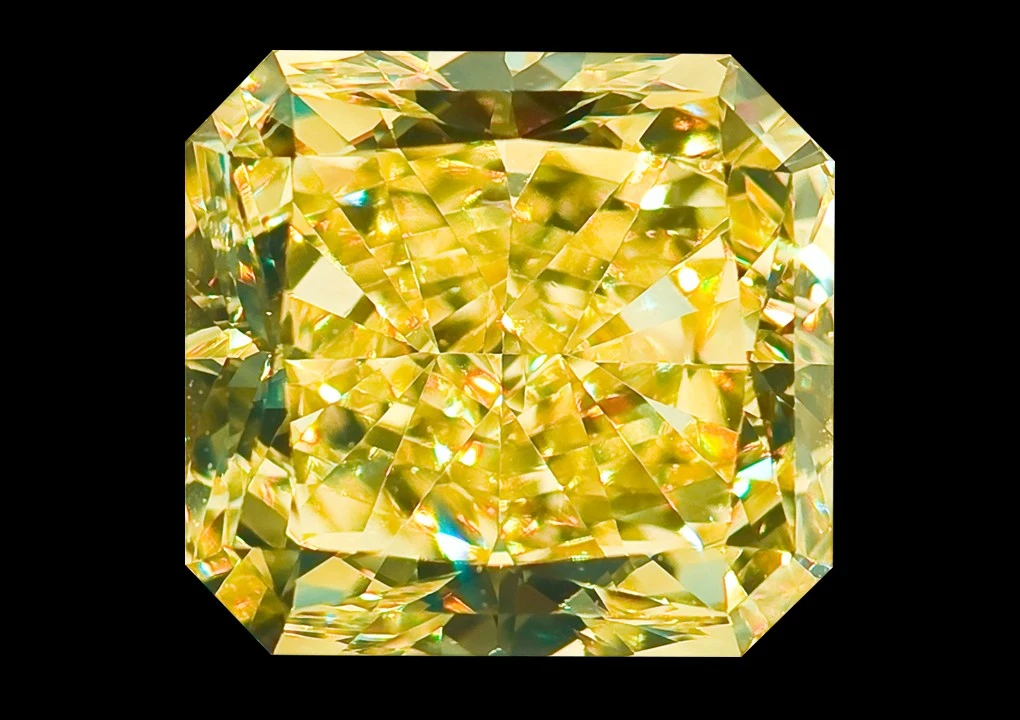
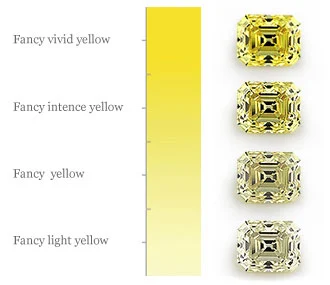
Yellow diamonds, also known as canary diamonds, are the most well-known among fancy diamonds. Unlike many white diamonds that appear yellow and are listed on the far end (Y-Z) of the standard diamond color scale, true fancy yellow diamonds are distinct and not categorized with these near-colorless diamonds.
A diamond is considered fancy yellow when it is graded using the following terms:
Light Yellow
Fancy Light Yellow
Fancy Yellow
Fancy Intense Yellow
Fancy Dark Yellow
Fancy Deep Yellow
Fancy Vivid Yellow
True fancy yellow diamonds have a strong, vivid color and are generally more expensive per carat due to their rare beauty. Approximately 60% of all fancy color diamonds are yellow diamonds. These diamonds contain nitrogen, which is responsible for their yellow color.
Yellow diamonds are an excellent choice for adding to your diamond collection and look especially striking when set in platinum or white gold settings.
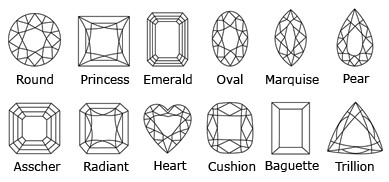
Diamonds come in various shapes, each possessing unique qualities. At Amba, we offer the highest quality certified diamonds to satisfy all tastes. Here are some of the popular diamond shapes:
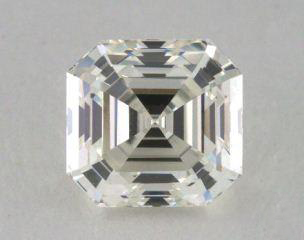
Also known as the “Square Emerald-Cut,” the Asscher Cut Diamond is made using a step-cut process and has cropped corners, giving it an almost octagonal appearance. These diamonds are bright, shiny, and clear. Due to their clarity, inclusions are more noticeable, so it is important to select an Asscher Cut Diamond that is flawless or nearly flawless. Asscher cut diamonds are often used in necklaces and earrings for their distinct look.
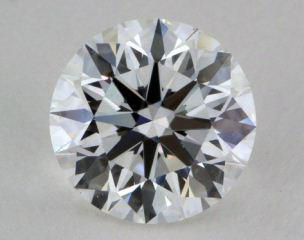
The Round Diamond, or Brilliant Cut Diamond, is the most popular shape for diamond engagement rings. It is cone-shaped to maximize light return through the top and has 58 facets: 33 on the crown and 25 on the pavilion. The angles of the crown and pavilion are complementary, ensuring maximum brilliance. Brilliant cut diamonds are also commonly used in bracelets and pendants.
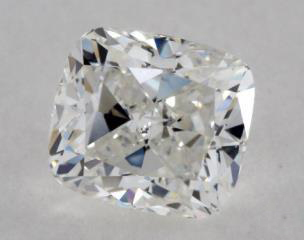
The Cushion Cut Diamond is an antique cut with a classic, romantic appeal. It combines the Old Mine Cut, popular in the late 19th and early 20th centuries, with a modern Oval-Cut Diamond. The Cushion Cut features large facets and rounded corners, designed to capture the beauty of candlelight, and contains 58 facets. Cushion cut diamonds are popular in earrings and vintage-style jewelry.
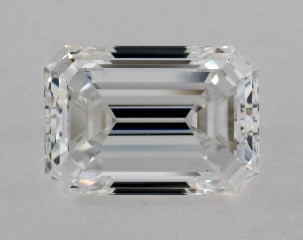
Known for their beauty and precision, Emerald Cut Diamonds are characterized by their step-cut style, which provides extreme clarity and a unique, glacier-like appearance. Originally used for emeralds, this cut is popular for square or rectangular diamonds. Emerald cut diamonds are frequently used in statement pieces and cocktail rings.
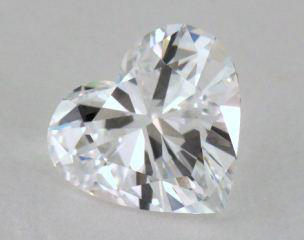
The Heart Shaped Diamond is among the most romantic shapes, with a cleft at the top and superior brilliance. Symmetry is essential for heart-shaped diamonds, as the two halves must be identical. Smaller heart-shaped diamonds (less than .50 carats) are best set in bezel or three-prong settings to enhance their appearance. Heart shaped diamonds are often used in pendants and anniversary jewelry.
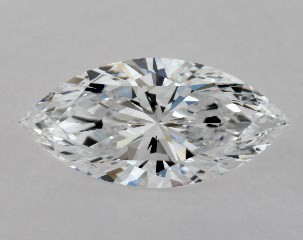
The Marquise Cut Diamond is a boat-shaped brilliant stone, considered a classic shape for engagement rings. This cut maximizes carat weight and eliminates inclusions while maintaining an elongated shape. However, due to the shape, color and clarity imperfections are more noticeable than in traditional Round Brilliant Diamonds. Marquise cut diamonds are also used in statement necklaces and brooches.
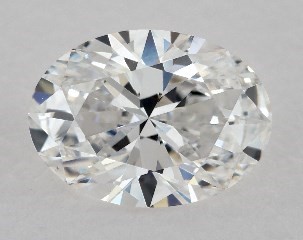
The Oval Cut Diamond is a modified version of the Round Brilliant, offering similar characteristics in a more unusual shape. This cut creates an optical illusion of length, making fingers appear more elongated. Oval cut diamonds are popular in necklaces and drop earrings.
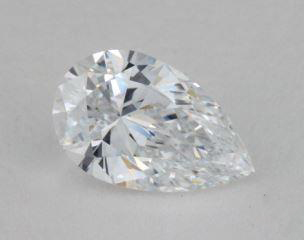
The Pear-Shaped Diamond combines the brilliance of a round cut with a unique shape, creating an unusual diamond that still maximizes light return. This shape, with 58 facets, offers a distinctive and subjective appearance based on personal taste. Pear shaped diamonds are often used in pendants and chandelier earrings.
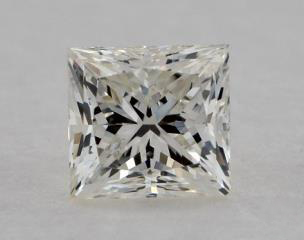
Princess Cut Diamonds are ideal for engagement rings due to their clarity and brilliance. The square cut design allows for maximum brilliance, but it is important to protect the four-pointed corners with an appropriate setting. Princess cut diamonds are also popular in modern jewelry designs, including earrings and pendants.
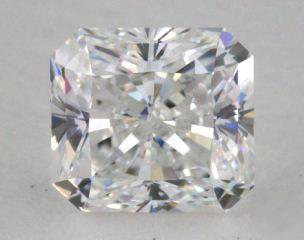
Combining the stylish square or rectangular shape with the brilliance of the Round Cut, the Radiant Cut Diamond offers a non-traditional yet brilliant appearance. Created in 1977 by Henry Grossbard, this cut blends the beauty of Round and Emerald Cuts into something unique. Radiant cut diamonds are often used in bold jewelry pieces and rings.
At Amba, we ensure that each diamond shape is crafted to the highest standards, providing you with a perfect blend of beauty and quality. Additionally, there are other diamond shapes available, including Trillion, Baguette, and Rose cuts, each offering unique and stunning options for your jewelry needs.
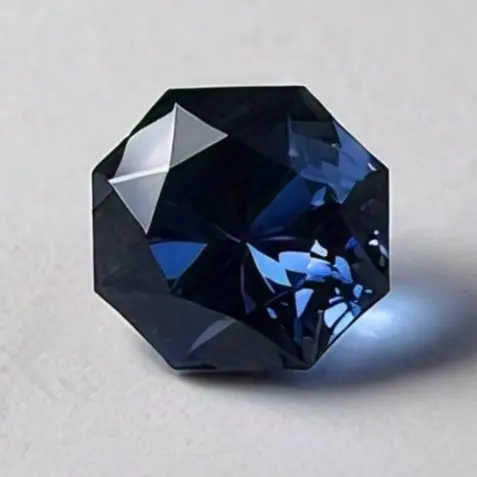
Blue sapphire is one of the most prized gemstones, known for its stunning primary hue. The value of a blue sapphire increases with the purity of its primary color. This rich blue color is created by trace amounts of titanium and iron, with higher levels of these elements leading to deeper color saturation.
The most common secondary hues in blue sapphires are purple, violet, and green. While purple and violet can enhance the gem’s overall beauty, green is less desirable. However, all blue sapphires have a slight greenish component when viewed from certain angles. Skilled cutters work to ensure that this green tint does not appear in the gem’s face-up position. Sometimes, a gray hue, or “gray mask,” can mix with green, giving the sapphire a cooler, steely look rather than the typical warm, velvety blue.
Eye-clean blue sapphires, free of inclusions, are rare, particularly in larger sizes. Nevertheless, blue sapphires with some internal inclusions can still be highly valuable, provided these inclusions do not detract from the gemstone’s brilliance or color. Sapphires of one carat or more are typically not cut to standard sizes or shapes; instead, each gemstone is shaped to optimize its color and weight.
Cutting significantly influences a sapphire’s color. As dichroic gemstones, blue sapphires show different colors from different angles. When viewed in one direction, they appear blue to violet-blue, and from another, they may look slightly greenish-blue. A master cutter will orient the gem to highlight the most desirable blue to violet-blue color through the finished gem’s crown.
Silk inclusions are thread-like structures within the sapphire that, if not too dense, do not compromise the gem’s color or brilliance. These inclusions can even enhance the sapphire’s value. Heat treatments used to alter a sapphire’s color and clarity often break down rutile silk inclusions, so intact silk indicates the sapphire is unheated. Other inclusions that withstand heat can also suggest the gem has not been heat-treated.
Heat treatment is commonly used to improve the color and clarity of blue sapphires. It’s estimated that over 90% of blue sapphires on the market have undergone this process. However, diffusion treatment, which also enhances the sapphire’s appearance, is more controversial and generally decreases the gemstone’s value compared to those that have only been heat-treated.
Blue sapphires are sourced from various locations worldwide, including Kashmir, Myanmar, Sri Lanka, Madagascar, Thailand, Australia, Tanzania, and Montana in the United States.
At Videh, we offer a curated selection of blue sapphires, ensuring that each gemstone meets our stringent standards for color, clarity, and overall beauty. Explore our collection to find the perfect sapphire that captures the essence of your unique style.
At Amba, we understand that clarity is a crucial aspect of evaluating natural gemstones. Clarity refers to the presence of internal flaws (inclusions) or external flaws on each stone. While most gemstones contain some inclusions, finding a flawless gemstone is rarer than finding a flawless diamond. The natural formation process within the Earth dictates the number and type of inclusions a gemstone may have.
Some gemstones, such as emeralds, are formed under intense geological conditions, making them almost always included. Conversely, darker gemstones like blue topaz, purple amethyst, and red garnet can mask inclusions due to the depth of their color, thus retaining their value. Lighter gemstones, including diamonds, showcase internal inclusions more prominently. It is less common to find an internally flawless emerald than an internally flawless diamond. Sapphires, in particular, rarely exhibit the high clarity seen in fine diamonds, as they host various inclusions. Even the best sapphires are not expected to be free of inclusions when viewed at 10x magnification, with these inclusions varying by their source and treatment history.
The Gemological Institute of America (GIA) classifies colored gemstones into three types based on their clarity:
Cutting colored gemstones is an art that aims to enhance their natural beauty by maximizing light reflection and minimizing inclusions. Unlike diamonds, there are no fixed rules for cutting colored gemstones. Cutters make choices based on the stone’s inclusions to minimize their impact and enhance the gemstone’s visual appeal.
The facets on the top or crown of a gemstone capture light, while those on the bottom or pavilion reflect light internally. This interplay of capturing and reflecting light creates various visual effects, enhancing the gemstone’s brilliance.
Polishing gemstones gives them a reflective finish, allowing light to refract through the stone and reflect off its surface. This process significantly contributes to a gemstone’s sparkle. Various materials, including fine diamond grades, metal oxides like aluminum oxide or ferric oxide, and even felt, leather, or wood, can be used for polishing.
At Amba, we are committed to offering gemstones that meet the highest standards of clarity, cut, and polish, ensuring that each piece of jewelry we create is a masterpiece of natural beauty and craftsmanship.
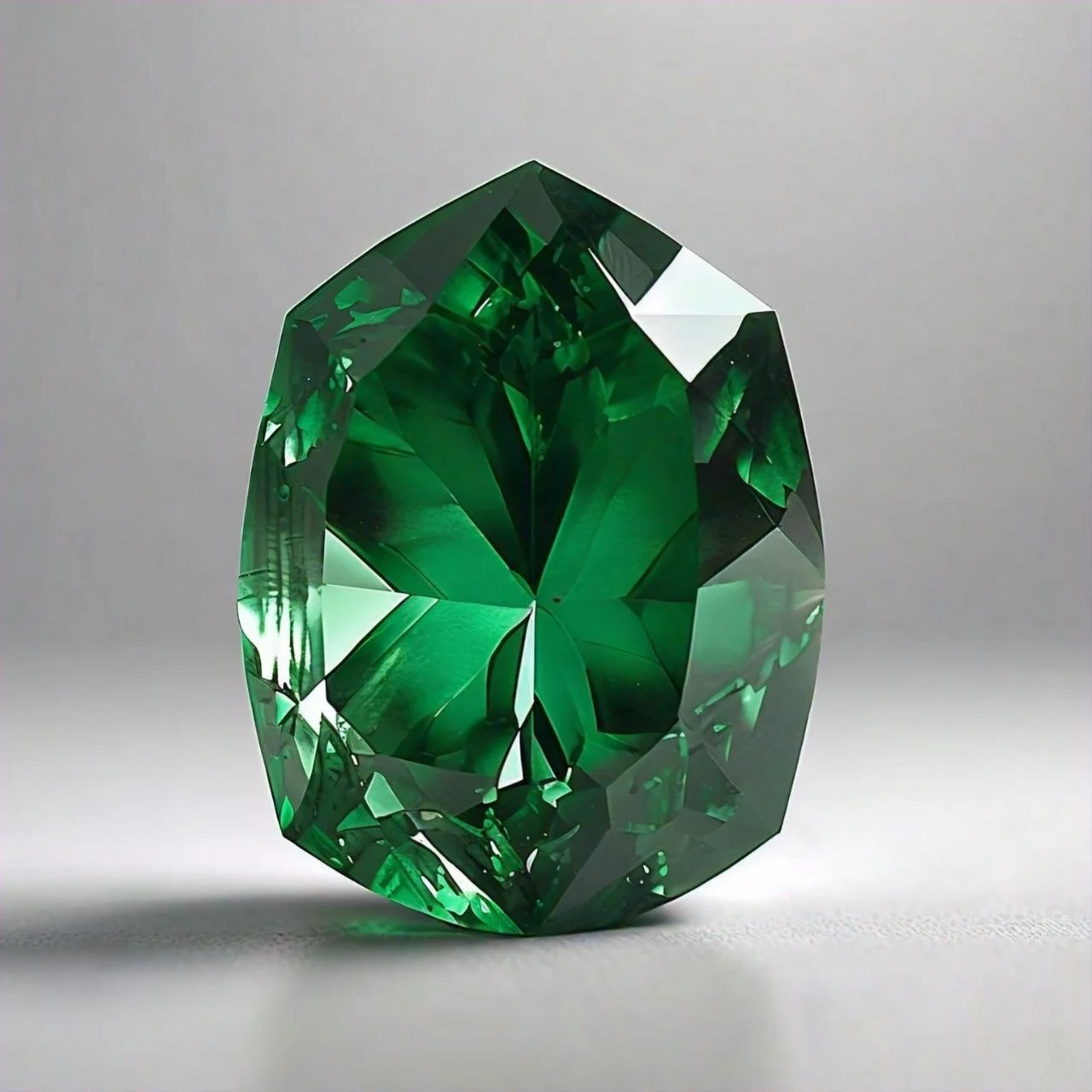
Emeralds are among the most precious natural gemstones, alongside rubies, sapphires, and diamonds. Recently named Pantone’s “Color of the Year” for 2013, emeralds continue to captivate with their stunning green hues. Emeralds belong to the beryl family, with their vibrant green color resulting from trace amounts of chromium and sometimes vanadium. Depending on the concentration of these elements, emeralds can range from light green to deep, dark green. Known for their beauty and symbolism, emeralds have represented rebirth and love for centuries.
When evaluating emeralds, color is the most important factor, broken down into three components: hue, saturation, and tone. The ideal emerald for an engagement ring is wellsaturated and bright. Emeralds come in hues from yellow-green to blue-green, with green being the primary hue. The most desirable emeralds exhibit a bluish-green to green color with vivid saturation and a medium to medium-dark tone. Highly prized emeralds are transparent with even color distribution and no visible color zoning. Secondary hues include yellow and blue, but when too yellowish or bluish, the stone is classified as a different beryl.
Emeralds typically have numerous inclusions and surface-breaking fissures. Unlike diamonds, which are graded for clarity under 10X magnification, emeralds are graded by eye. An emerald without visible inclusions to the naked eye is considered flawless. Stones free of surface-breaking fissures are extremely rare. Most emeralds undergo treatment, such as “oiling,” to enhance their apparent clarity. The most expensive emeralds are eye-clean with an intense primary green hue, minimal secondary hues, and a medium-dark tone.
Emeralds are sourced from various locations worldwide, each contributing to their unique characteristics. Notable sources include Colombia, Zambia, Brazil, and Zimbabwe, with each region producing emeralds with distinct qualities.
Emerald is just one variety of the mineral beryl. Yellow or orange beryl is known as heliodor, pink or salmon-colored beryl as morganite, and the rare bixbite is a deep, intense red. Emeralds, however, stand out with their deep, intense green, sometimes showing light green or yellowish tinges.
At Amba, we offer a curated selection of emeralds, each chosen for its exceptional color, clarity, and cut. Explore our collection to find the perfect emerald that symbolizes timeless elegance and enduring love.
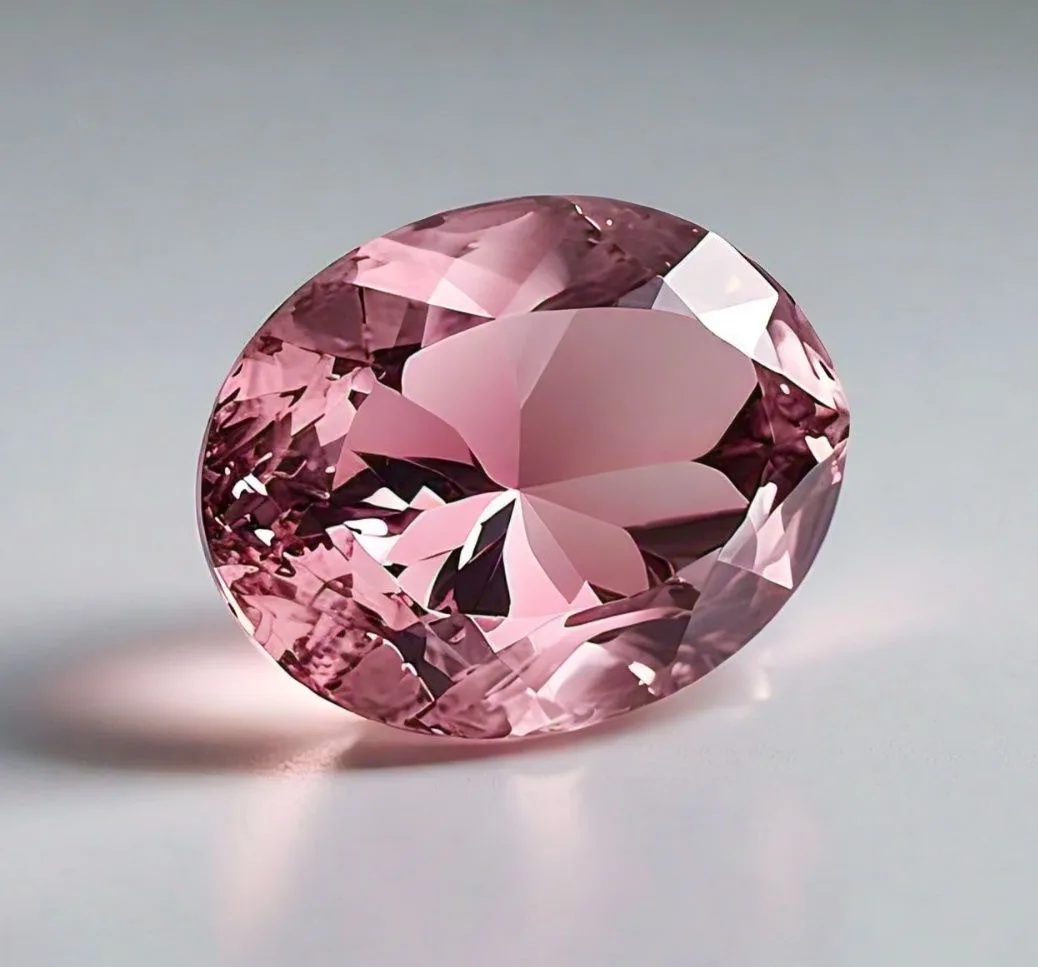
Pink sapphires range from very pale pastel pinks to vibrant and intense hot pinks. Their captivating color is due to traces of chromium, with lower concentrations producing pink sapphires and very high concentrations resulting in rubies. When titanium is present in the crystal structure, it gives the sapphire a more purplish pink hue.
Due to their rarity, pink sapphires that are half a carat or larger are not cut into standard sizes. Each gemstone is carefully cut to retain as much of its original weight as possible, often resulting in mixed cuts that enhance the color’s beauty. The most common shapes you’ll find are cushions or ovals, designed to showcase the gem’s natural allure.
Eye-clean, untreated pink sapphires are available, though they are rare. Most pink sapphires undergo heat treatment to enhance their clarity and color. Many pink sapphires from Madagascar are subjected to moderate heat treatments to reduce purplish secondary colors. Unlike the high-temperature treatments used for blue and yellow sapphires, Madagascar pink sapphires are heated at lower temperatures (around 400º C) for only a few hours. This gentle process preserves the gemstone’s internal characteristics, unlike high-temperature treatments that can significantly alter inclusions.
Madagascar is a notable source of pink sapphires, known for producing stones with exquisite color and quality. The careful and moderate heat treatments applied to these gems enhance their natural beauty without compromising their integrity.
At Videh, we offer a stunning selection of pink sapphires, each chosen for its unique color, clarity, and cut. Explore our collection to find the perfect pink sapphire that embodies elegance and rarity.
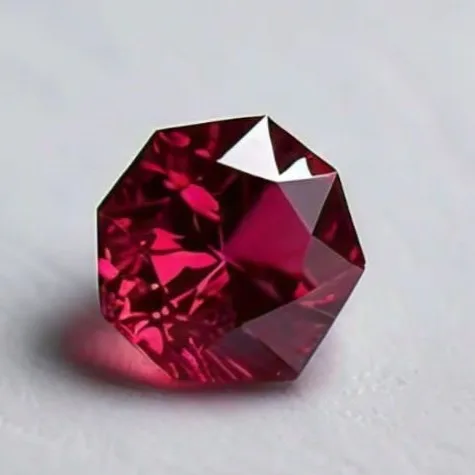
At Amba, we offer a curated selection of red rubies, celebrated for their deep, fiery hues and timeless beauty. Universally accepted as red corundum, rubies owe their vibrant red color to high levels of the trace element chromium, the same element that imparts pink sapphires their color. The key difference lies in the saturation level, which determines whether the gemstone is classified as a ruby or a pink sapphire. In some Asian markets, rubies with traces of pink are acceptable, whereas, in European and North American markets, red and pink corundum are often categorized separately.
Color is the most critical factor in evaluating a ruby, with transparency being the secondary consideration. Objective color determination for rubies has historically been challenging, with terms like “pigeon’s blood,” “pomegranate,” “saffron,” and “China rose” used to describe ruby colors. However, these terms lack universal recognition. Today, the ideal ruby color is considered to be a vivid, medium-dark red to slightly purplish red with a medium to mediumdark tone and either strong or vivid saturation. Rubies from Myanmar often exhibit a slight purple secondary color, while Thai rubies may display a “garnet red” color due to their dark tone. The ability of a ruby to fluoresce can intensify its color, with rutile needles reflecting light to enhance its hue further.
A ruby’s unique ability to fluoresce can sometimes help determine its origin. Burmese rubies, often formed in marble, tend to have fluorescence, whereas rubies from Thailand and Cambodia, formed in basaltic iron-rich rocks, do not. Like sapphires, rubies are graded by eye level rather than at 10x magnification, and a high-clarity ruby is considered “eye clean.”
Myanmar, formerly known as Burma, is renowned for producing the highest quality rubies. Burmese rubies, primarily found in the Mogôk Valley and Möng Hsu, are celebrated for their intense color, silk, and strong fluorescence. The Mogôk Valley has been a ruby source for nearly a thousand years, while the Möng Hsu area was developed in the 1990s. Due to the 2008 U.S. Congress act banning the importation of Burmese jade and ruby, the prices of Burmese rubies have increased, making them even more valuable.
Sri Lanka, often called the “Island of Gems,” has a rich history of gemstone formation. Sri Lankan rubies tend to be more brilliant, with lighter color tones that may include pink or purple secondary colors and higher clarity than rubies from other locations. These rubies also exhibit strong fluorescence, color zoning, and the presence of silk.
Other notable sources of rubies include Vietnam, Thailand, Afghanistan, Africa, Cambodia, India, Kashmir, Laos, Nepal, Pakistan, Tajikistan, and North Carolina in the United States.
At Amba, our collection of red rubies embodies the passion and elegance that these gemstones symbolize. Explore our exquisite selection to find the perfect ruby that resonates with your unique style and story.
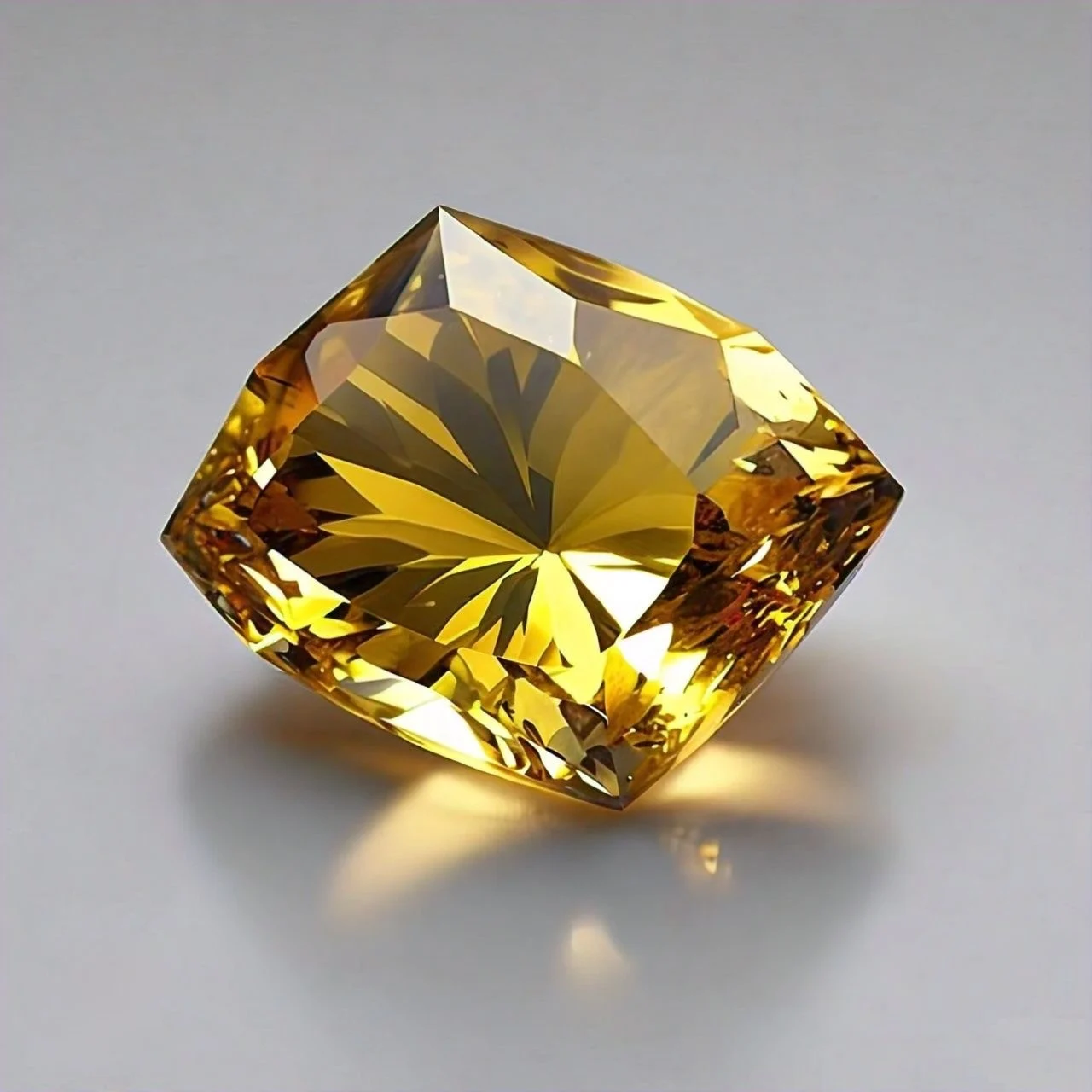
After blue sapphires, yellow sapphires are the most sought-after gemstones in today’s jewelry industry. Known for their striking resemblance to yellow diamonds, these gems come in a spectrum of colors, from bright canary yellow to greenish-yellow and everything in between. While many customers prefer a medium, vibrant canary yellow, deep orangish-yellow (whisky color) sapphires are highly valued in some Asian markets.
The yellow color in sapphires is primarily due to trace amounts of iron, with higher iron concentrations leading to increased color saturation. Yellow sapphires can also gain their color through natural low-level radiation within the earth or lab-induced irradiation. However, gems colored by irradiation may fade when exposed to heat and light. Heat treatments have significantly boosted the supply of yellow sapphires available today. Despite this, unheated yellow sapphires with strong saturation remain rare and highly prized.
Yellow sapphires generally have fewer inclusions than other sapphire colors and are held to higher clarity standards. The presence of titanium can impart an undesirable green cast, making relatively titanium-free sapphires the most valuable. Unlike other sapphires, fine yellow sapphires rarely contain titanium-bearing rutile silk. The transparency and clarity of yellow sapphires are crucial to their value.
Historically, yellow sapphire rough has been less expensive than blue, pink, or Padparadscha (a mix of pink and orange) sapphires. As a result, cutters are less likely to compromise brilliance for weight retention, making well-cut yellow sapphires more common. These gems are also more likely to be available in specialty cuts, such as radiant cuts, which enhance their color.
Yellow sapphires are found in several locations worldwide, including Tanzania, Madagascar, Thailand, and Australia. However, Sri Lanka is the primary source of these radiant gems.
At Videh, we offer an exquisite selection of yellow sapphires, each carefully chosen for its vibrant color, exceptional clarity, and expert cut. Explore our collection to find the perfect yellow sapphire that reflects your unique style and taste.